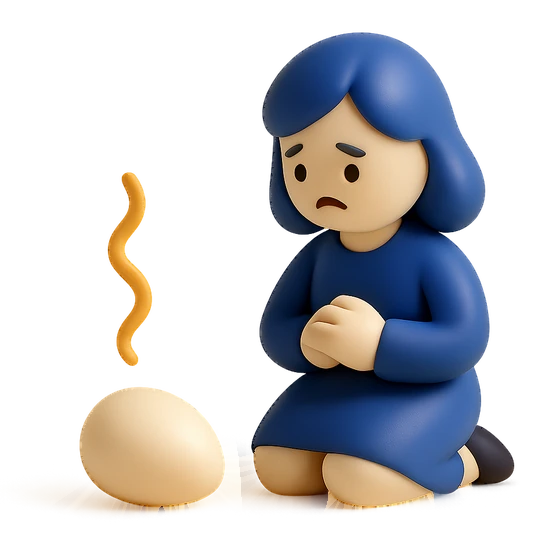
🤖 Literally, in English
“Someone else's house is worse than an executioner.”
Чужа хата гірше ката. Chuzha khata hirshe kata
🤨 What does it ACTUALLY mean? →
🇬🇧 What you'd actually say
“There's no place like your own home.”
also: “Living in someone else's home is misery.” · “Nothing is worse than not having your own place.”
- 📖 Meaning
- Living in someone else's home, dependent on them, is deeply unpleasant.
- 💡 Why it's funny
- The comparison is to an executioner, which is a lot of feeling to have about a spare room.
- 🧭 Closest English idiom
- No direct English equivalent. 'There's no place like home' is warm and nostalgic. This saying is the opposite emotion — it is about the humiliation of depending on someone else's roof. English has no fixed phrase for that.
- 📝 Explanation
- Said by people renting, staying with in-laws, or living somewhere on sufferance. Sharper and sadder than it first appears.
🧠 Learn
- put up with (phrase) — to accept something unpleasant without complaining — терпіти, миритися “I put up with it for two years.”
- on sufferance (phrase) — allowed to stay only because someone tolerates you — з ласки, з милості “He lived there on sufferance.”
🗣 In context
Швидше б своє житло. Чужа хата гірше ката.
I can't wait to have my own place. There's no place like your own home.
🎧 Hear the contrast
dontpushthehorses.xyz